
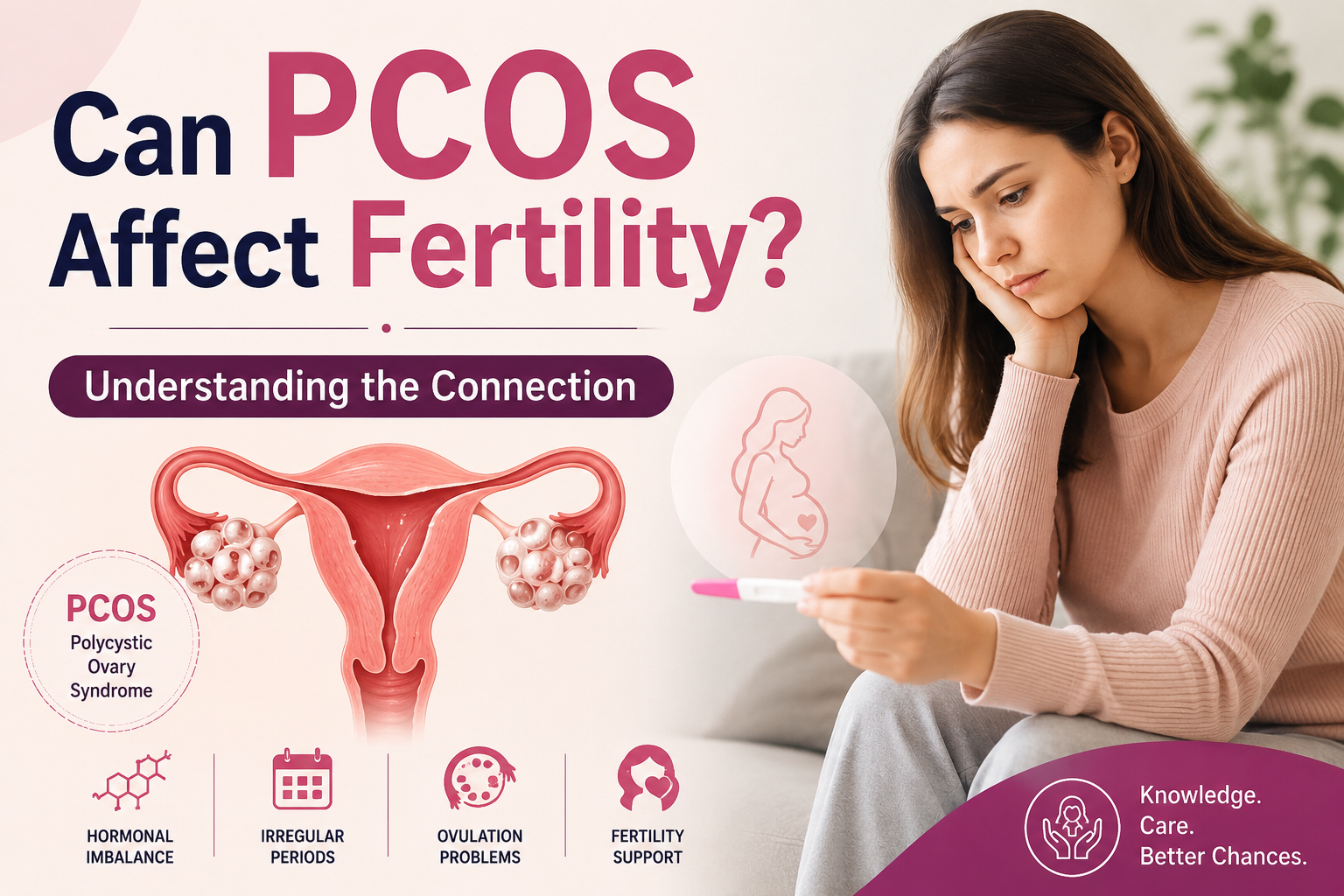
Can PCOS Affect Fertility? Understanding the Connection
INTRODUCTION
Polycystic Ovary Syndrome (PCOS) is one of the most common hormonal disorders affecting women of reproductive age. According to global health estimates, millions of women worldwide live with PCOS, making it a leading cause of ovulatory infertility. While receiving a diagnosis of PCOS can feel overwhelming, it is important to understand that many women with PCOS successfully conceive and deliver healthy babies.
The connection between PCOS and fertility primarily revolves around hormonal imbalance, irregular ovulation, insulin resistance, and metabolic disturbances. Understanding these factors can help women make informed decisions about their reproductive health.
PCOD Treatment
PCOS Symptoms
PCOS and Fertility
PCOS Ovulation Problems
Hormonal Imbalance in PCOS
Insulin Resistance and PCOS
PCOS Diet Plan
Weight Loss for PCOS
Yoga for PCOS
Natural Treatment for PCOS
How to Get Pregnant with PCOS
Ayurvedic Treatment for PCOS
WHAT IS PCOS?
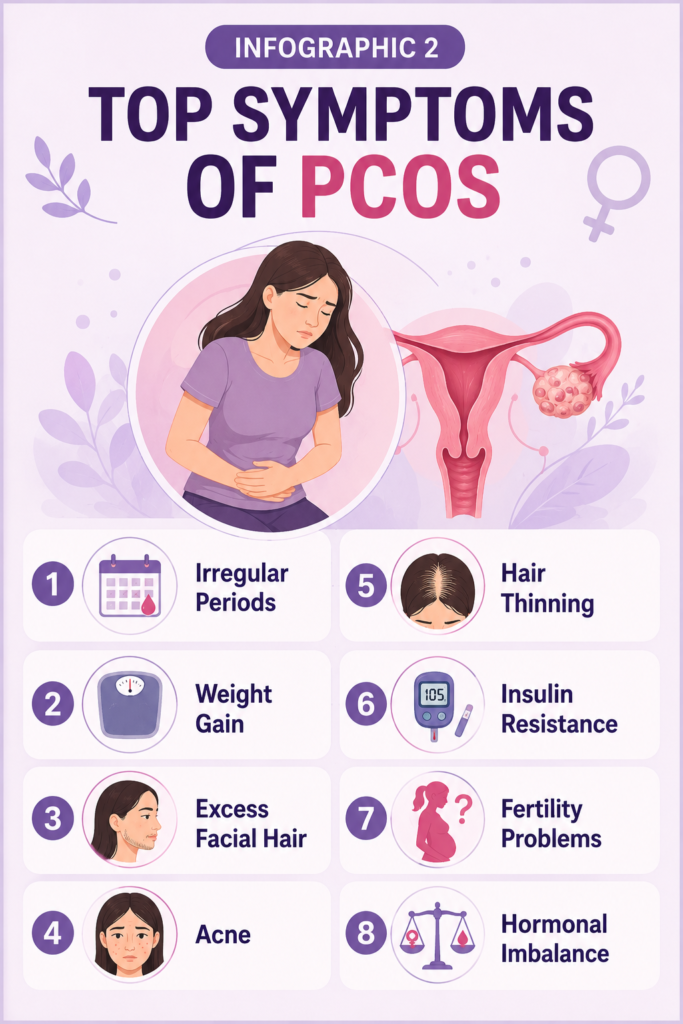
PCOS is a hormonal and metabolic condition characterized by irregular menstrual cycles, elevated androgen levels, insulin resistance, and ovarian dysfunction. Women with PCOS often experience irregular periods, acne, excessive facial hair, scalp hair thinning, weight gain, and fertility challenges.
HOW DOES PCOS AFFECT FERTILITY?
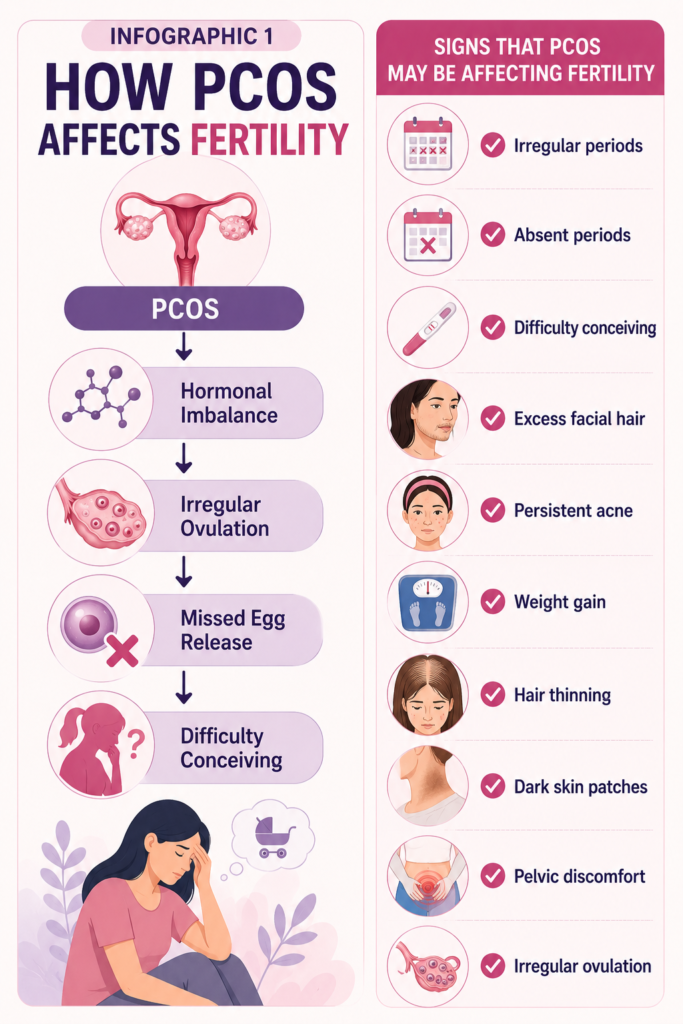
1. Irregular Ovulation
Ovulation is the release of a mature egg from the ovary. In PCOS, hormonal disturbances interfere with this process, making ovulation irregular.2. Anovulation
Some women with PCOS may not ovulate at all during certain cycles. Without ovulation, natural conception becomes difficult.
3. Hormonal Imbalance
Excess androgen production and disrupted reproductive hormones may affect follicle development and egg maturation.
4. Insulin Resistance
Insulin resistance is common in PCOS and can increase androgen production, further disrupting ovulation.
5. Poor Egg Quality
Metabolic and hormonal disturbances may affect egg development and quality.
6. Obesity and Fertility
Excess body weight can worsen insulin resistance and hormonal imbalance, reducing fertility potential.
7. Inflammation
Low-grade inflammation may contribute to reproductive dysfunction in some women with PCOS.
HOW PCOS AFFECTS FERTILITY
TOP SYMPTOMS OF PCOS
CAN WOMEN WITH PCOS GET PREGNANT?
Yes. Many women with PCOS conceive naturally. Others may require lifestyle modifications or fertility support. Early diagnosis and proactive management often improve reproductive outcomes. Studies indicate that improving ovulation frequency can significantly improve pregnancy chances.
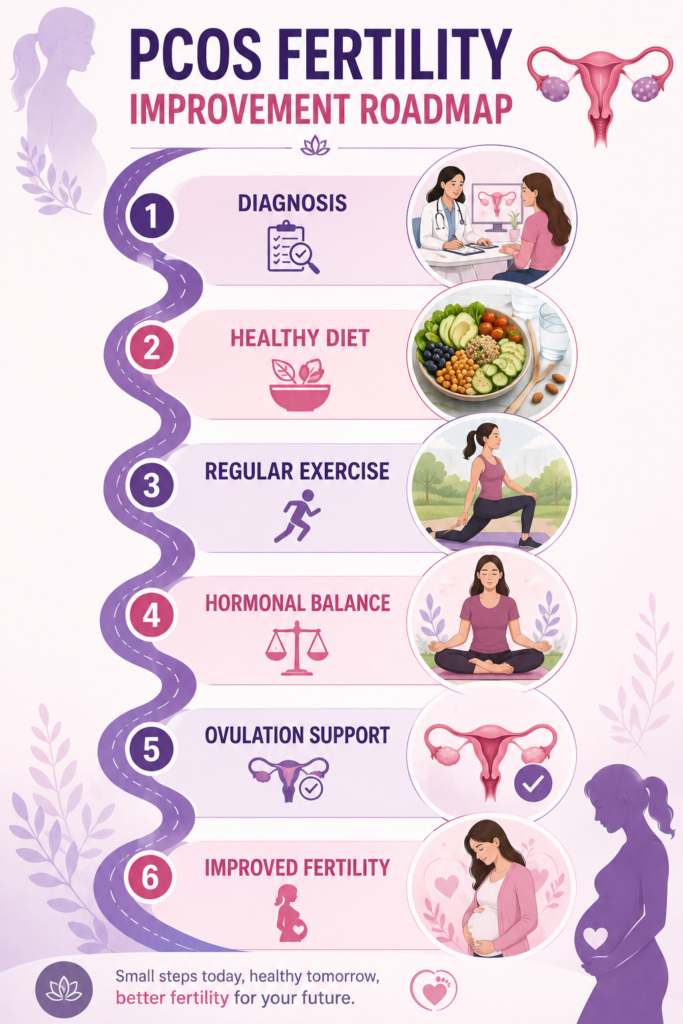
WAYS TO IMPROVE FERTILITY IN WOMEN WITH PCOS
Weight Management
Even modest weight reduction may improve hormonal balance and ovulation.
Healthy Diet
A balanced diet rich in vegetables, protein, fiber, and healthy fats supports metabolic health.
Exercise
Regular physical activity improves insulin sensitivity and overall reproductive wellness.
Stress Management
Chronic stress may influence hormone regulation. Meditation and relaxation practices can help.
Adequate Sleep
Good sleep supports hormone production and metabolic function.
Insulin Control
Managing blood sugar fluctuations can improve hormonal stability.
Fertility Tracking
Monitoring cycles and ovulation patterns may help identify fertile windows.
PCOS FERTILITY IMPROVEMENT ROADMAP
PCOS DIET TIPS FOR FERTILITY
Recommended Foods:
- Leafy vegetables
- Whole grains
- Lentils and legumes
- Lean protein
- Nuts and seeds
- Healthy fats
- Fresh fruits in moderation
Foods to Limit:
- Sugary drinks
- Refined carbohydrates
- Excess processed foods
- Deep-fried foods
- Excessive desserts
YOGA AND LIFESTYLE CHANGES
Yoga, meditation, and pranayama may support stress reduction and overall well-being. Lifestyle interventions remain among the most recommended strategies for women seeking better reproductive health.
Recommended practices:
• Bhramari Pranayama
• Anulom Vilom
• Surya Namaskar
• Butterfly Pose
• Child’s Pose
• Mindfulness Meditation
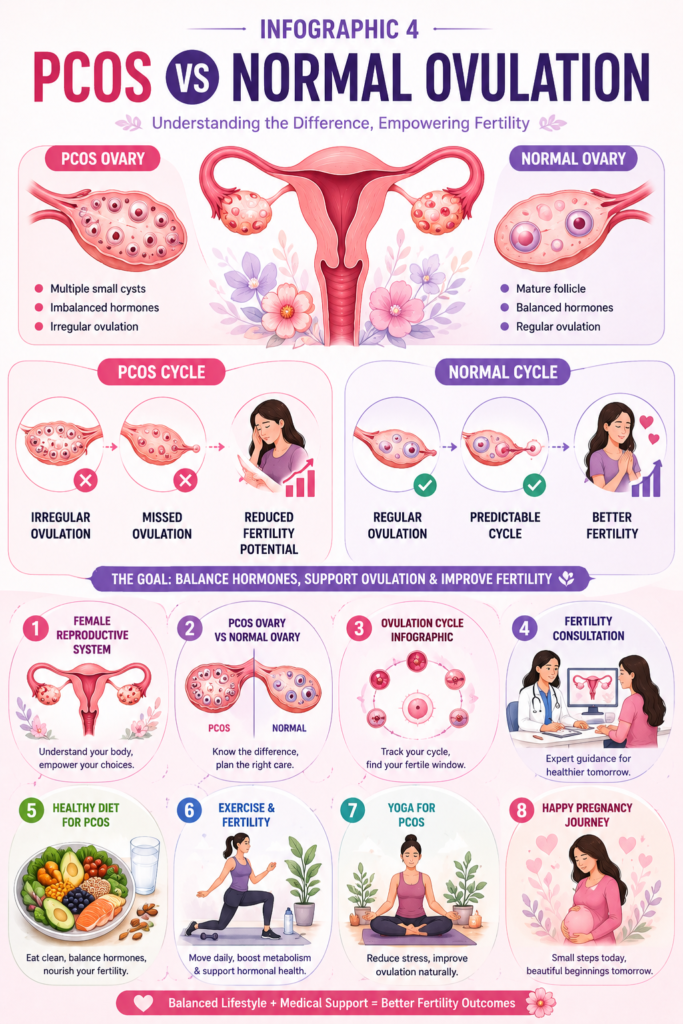
PCOS VS NORMAL OVULATION
FAQS
1. Can PCOS cause infertility permanently? No. Many women with PCOS conceive successfully.
2. Can women with PCOS get pregnant naturally? Yes, many women do.
3. What are the chances of pregnancy with PCOS? The chances vary depending on ovulation and overall health.
4. Does weight loss improve fertility in PCOS? It may help improve ovulation and hormonal balance.
5. Is insulin resistance linked to fertility problems? Yes, insulin resistance may affect ovulation.
6. Can exercise improve PCOS symptoms? Regular exercise may support metabolic and hormonal health.
7. Is stress associated with fertility issues? Stress may indirectly influence reproductive health.
8. What foods are best for PCOS? High-fiber foods, lean proteins, and healthy fats.
9. Can PCOS be managed naturally? Lifestyle changes may support symptom management.
10. Should I seek professional help? Yes, personalized medical advice is important.
AYURVEDIC APPROACH TO PCOS MANAGEMENT BY VEDAS CURE
Ayurveda views PCOS as a condition involving imbalance in the body’s natural regulatory systems. The Ayurvedic approach focuses on supporting hormonal balance, metabolic health, digestive wellness, and reproductive function through a holistic lifestyle strategy.
Vedas Cure follows a patient-centric approach that combines dietary guidance, lifestyle modification, wellness counseling, and Ayurvedic principles. The goal is to support menstrual regularity, metabolic balance, and overall reproductive wellness while
encouraging sustainable lifestyle improvements.
Women experiencing irregular cycles, hormonal disturbances, or fertility concerns are encouraged to seek professional consultation and individualized guidance. While no treatment can guarantee pregnancy, a comprehensive wellness plan may support the body’s natural reproductive processes.


%20is%20one%20of%20the%20most%20common%20hormonal%20disorders%20affecting%20women%20of%20reproductive%20age.%20According%20to%20global%20health%20estimates,%20millions%20of%20women%20worldwide%20live%20with%20PCOS,%20making%20it%20a%20leading%20cause%20of%20ovulatory%20infertility.%20While%20receiving%20a%20diagnosis%20of%20PCOS%20can%20feel%20overwhelming,%20it%20%5B…%5D&media=https://vedascure.in/wp-content/uploads/2026/06/Can-Pcos-Affect-Fertility.png)